

If you’re a beginner guitar player, it’s easy to feel like you need hours of practice every day to get better.
However, you don’t.
In fact, one of the biggest mistakes beginners make is trying to practice too much, too soon. You play for an hour one day, your fingers hurt, you get stuck, life gets busy, and suddenly your guitar sits in the corner for two weeks.
So instead, my approach is simple: keep it consistent and keep it realistic.
Because of that, learning how to practice guitar for just 15 minutes a day can actually lead to real progress surprisingly fast, especially as a beginner. In this post, I’ll show you exactly how to practice guitar using a simple, structured 15-minute routine that builds chords, rhythm, confidence, and consistency without overwhelming you.
Why 15 Minutes a Day Works – How to Practice Guitar
A lot of beginner guitar players believe progress only comes from long practice sessions. In other words, they think they need to lock themselves in a room for hours to improve.
However, that’s not true.
Instead, consistency beats intensity almost every time.
As a result, practicing a little bit every day helps you:
- Build muscle memory faster
- Improve chord changes naturally
- Develop rhythm and timing
- Avoid burnout
- Stay motivated long term
In addition, your hands and brain learn guitar through repetition. Therefore, short daily sessions are actually ideal for beginners learning how to practice guitar effectively.
A Simple 15-Minute Guitar Practice Routine

If you’re wondering how to practice guitar in a simple, structured way, here’s a routine you can follow every day.
First 3 Minutes: Warm Up Your Hands
First of all, start with something easy to get your fingers moving.
For example:
- Pick each open string slowly (and name them out loud)
- Try a basic chromatic exercise
- Light strumming on open strings
- Simple finger stretches
At this stage, don’t worry about speed. Instead, just loosen up and get your hands warm. If your fingers feel stiff at first, that’s completely normal.
Next 4 Minutes: Practice Your Chords
After that, move into chords. This is where most beginners should spend the majority of their time.
Focus on just 2–3 chords.
For example:
- G
- C
- D
Now work on:
- Clean finger placement
- Getting every string to ring clearly
- Slow chord changes
- Staying relaxed (no tension)
Most importantly, practice switching between two chords repeatedly without stopping.
For instance:
- G → C
- C → D
- G → D
At this point, don’t worry about speed. Instead, smooth and clean movement comes first. Here’s a refresher on how to play those 3 chords.
Next 4 Minutes: Rhythm and Strumming
Now that your chords are in place, it’s time to focus on rhythm.
By working on your rhythm, your guitar will start sounding more musical right away.
Try simple patterns like:
- Down Down Up Up Down Up
- Steady down strums
- Slow eighth-note strumming
In addition, I highly recommend using a metronome. For example, Google has a simple one you can use instantly. This helps develop timing and keeps your rhythm steady.
However, if it feels overwhelming at first, you can skip it for now and come back later.
Final 4 Minutes: Play Something Musical
Finally, this is the most important part of learning how to practice guitar.
Take what you just worked on and actually make music.
For example:
- A simple chord progression
- A song you’re learning
- A looping exercise
- A basic rhythm jam
This step matters a lot more than most beginners realize.
Because of that, you don’t want practice to feel like homework all the time. Instead, finishing each session by actually playing music keeps you motivated to come back tomorrow.
Even two chords can sound great when you play them consistently. And if you’re playing along to a song you’re learning, it’s as good as practicing with a metronome.
Beginner Practice Mistakes to Avoid

Practicing Too Many Things at Once
First, avoid trying to learn too much at once.
For example, you do NOT need to learn:
- 15 chords
- Multiple strumming patterns
- Scales
- Fingerstyle
- Barre chords
all in the same week.
Instead, break everything into small, manageable steps.
Playing Too Fast
Next, almost every beginner rushes chord changes.
However, slow practice is good practice.
If you can switch chords slowly and cleanly, speed will naturally develop later.
Skipping Practice for Days
The goal is consistency, not perfection.
Some days your practice session might only last 10 minutes. That still counts.
Picking up the guitar regularly is what matters most.
How to Practice Guitar and Stay Consistent
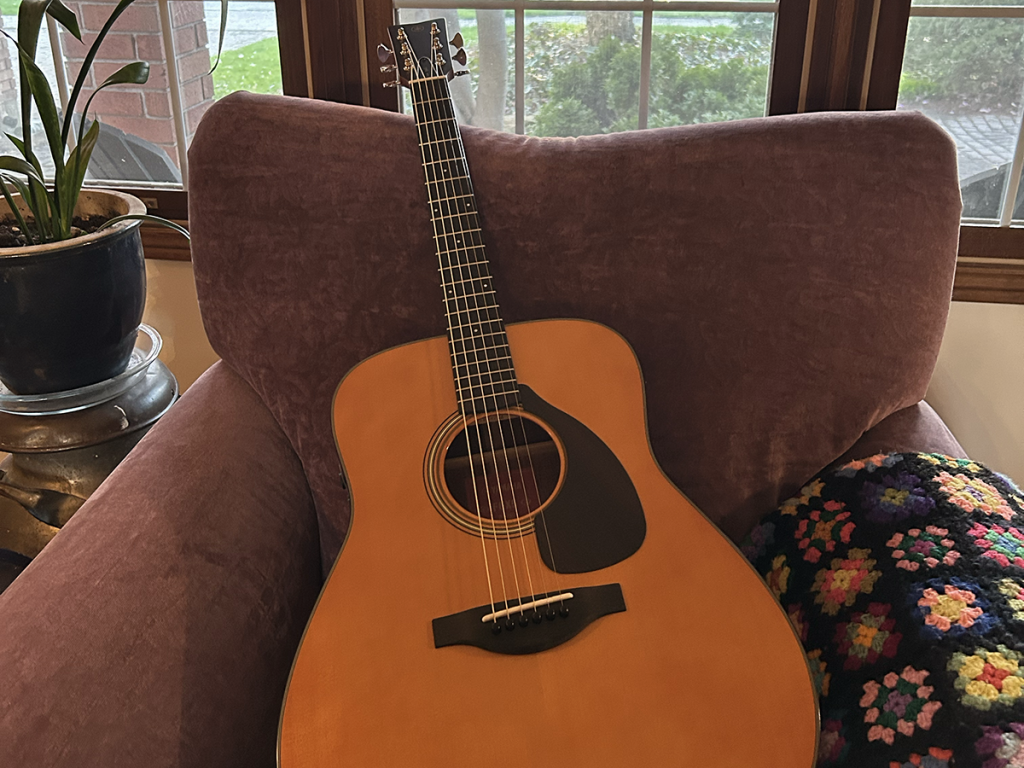
Here are a few things that genuinely help:
Leave Your Guitar Out
If your guitar is visible, you’ll play it more. The more barriers you put between you and playing, the less you’ll do it.
Attach Practice to a Habit
Try practicing:
- After dinner
- Before work
- During your morning coffee
- Right after school
Consistency becomes easier when practice is tied to something you already do every day. For me, there’s nothing better than sitting down with a cup of tea and picking up the guitar.
Track Small Wins
A lot of guitar progress feels invisible day to day. But string those days together, and you can start to see a huge difference.
Try to keep a journal or notes on what you’re working on. I use my Notes app on my iPhone to track things like:
- chord changes
- songs learned
- strumming improvements
- what I did last practice session
I didn’t do this for several years, but once I started tracking my practice, I noticed a big jump in progress. You’ll realize you’re improving faster than you think.
Regular Practice Over Perfect Practice
Like anything in life (working out, investing, school), consistently showing up always wins. I can’t stress this enough for beginner guitar players.
You do not need a perfect routine, expensive gear, or hours of practice every day.
You just need consistency.
Fifteen focused minutes a day can completely change your playing over time.
Start small. Keep showing up. Trust the process.
And most importantly, enjoy it! If you’re not having fun playing the instrument, make some tweaks so it becomes more enjoyable.
Maybe you’re getting bogged down with exercises and just want to learn songs. Great! The most important thing when you’re starting out is to just pick up the instrument.
Final Notes
If you’re just getting started with guitar, don’t overthink practice.
Focus on:
- simple chords
- basic rhythm
- consistency
- having fun
That foundation will take you a lot further than you think.
And if you’re looking for more beginner-friendly guitar lessons, chord tutorials, and campfire-style practice ideas, check out some of my other content at bradleykerr.com.